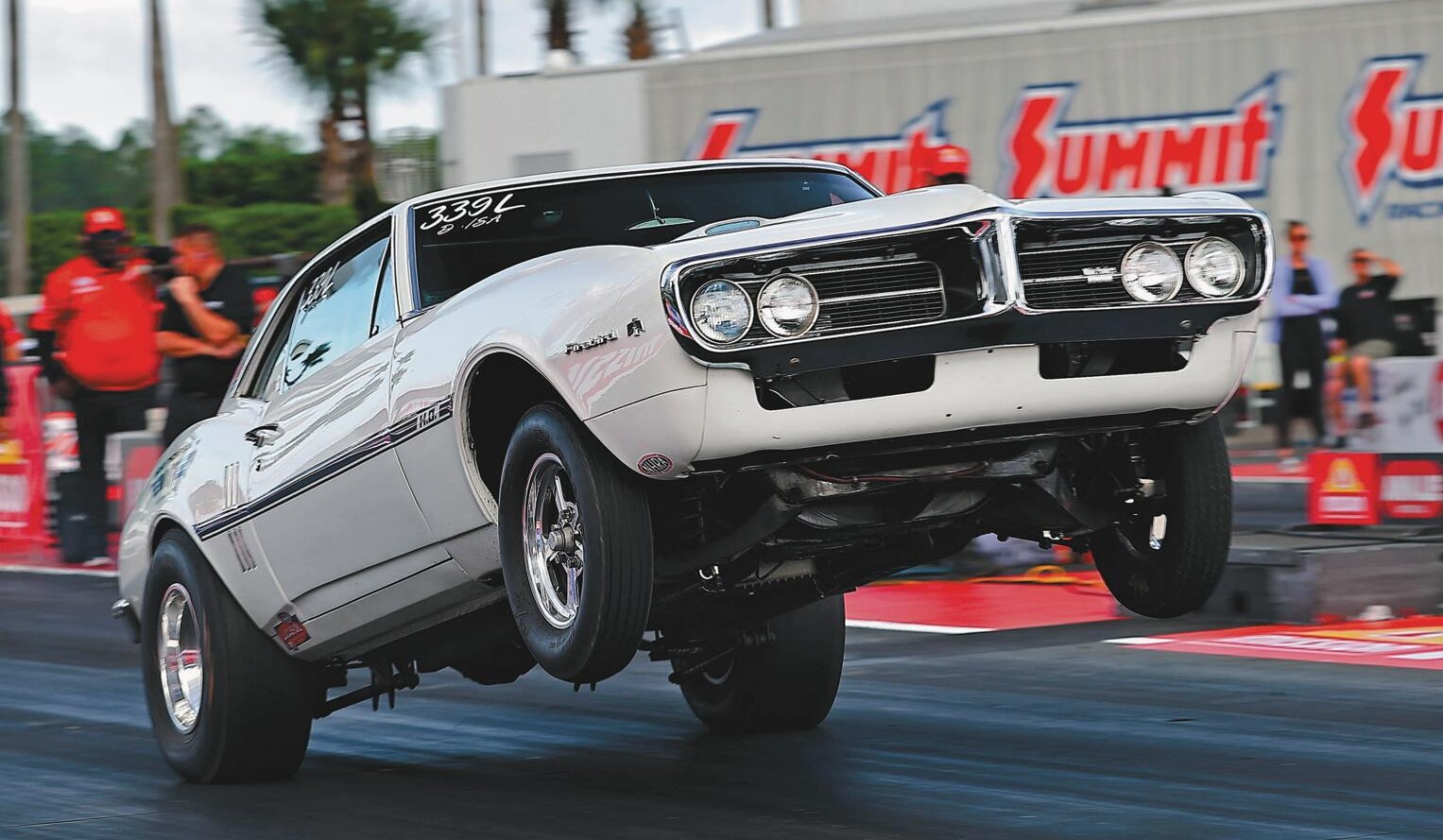
A while back, we posted the Affordable Front Suspension Mods for Bracket Racing article. In it, we looked at bushings, ball joints, bump stops, travel limiters, bump steer kits, caster/camber, and more to properly set up your car’s front suspension. What was missing (aside from springs, and only your car can tell you what you need there) was shock absorbers. In this article we’ll show you how a set of affordable adjustable shocks can get the job done and save you some money in the process.
There are a lot of reasons why adjustable shocks are the way to go. If you have a lower horsepower car, you can’t rely on brute power to get you down the track. Then there are variables. Track conditions constantly change. Some are painted with sticky traction compounds, but others are not. Consider weather conditions too; the right “air” can affect how the car reacts to the track. Having shock valving options can really help with chassis setup.
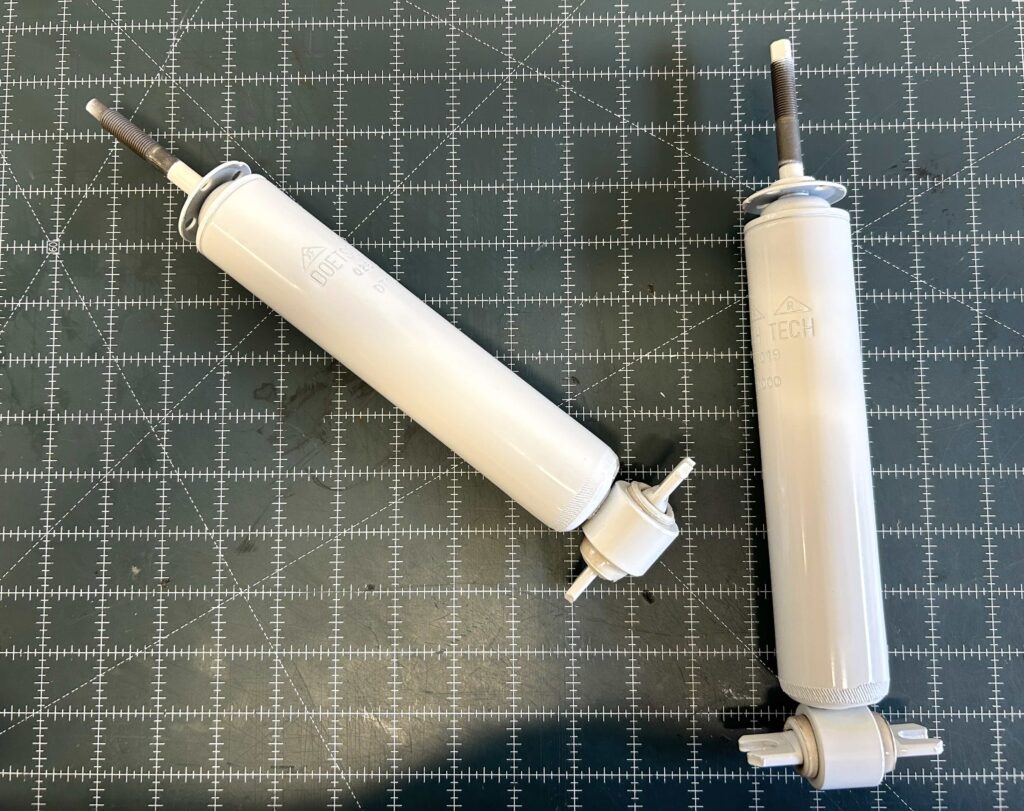
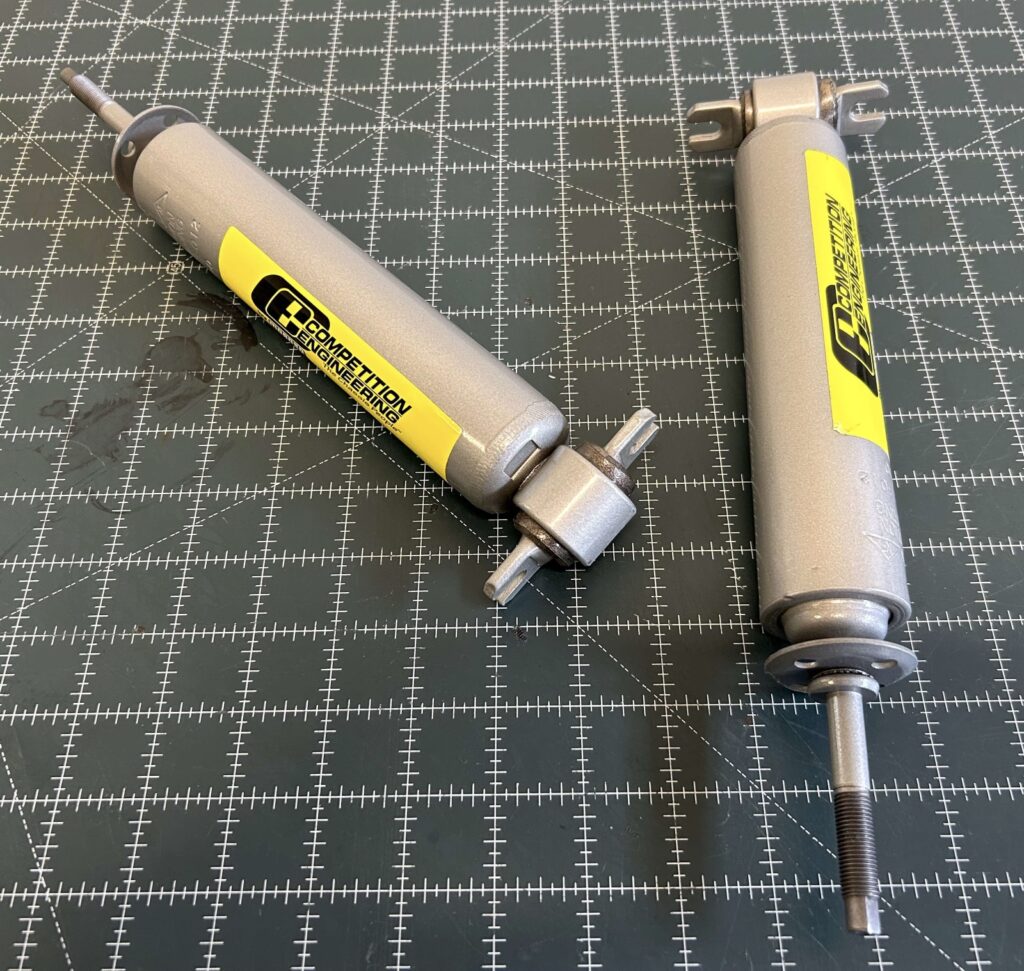
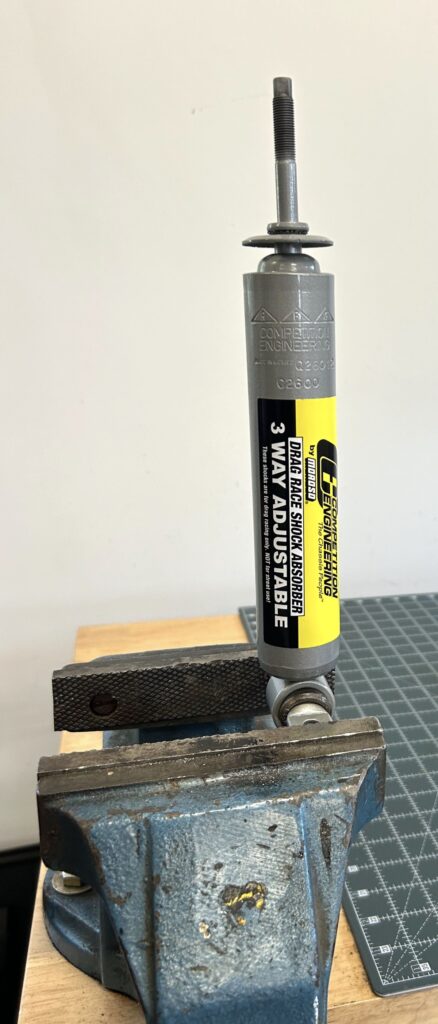
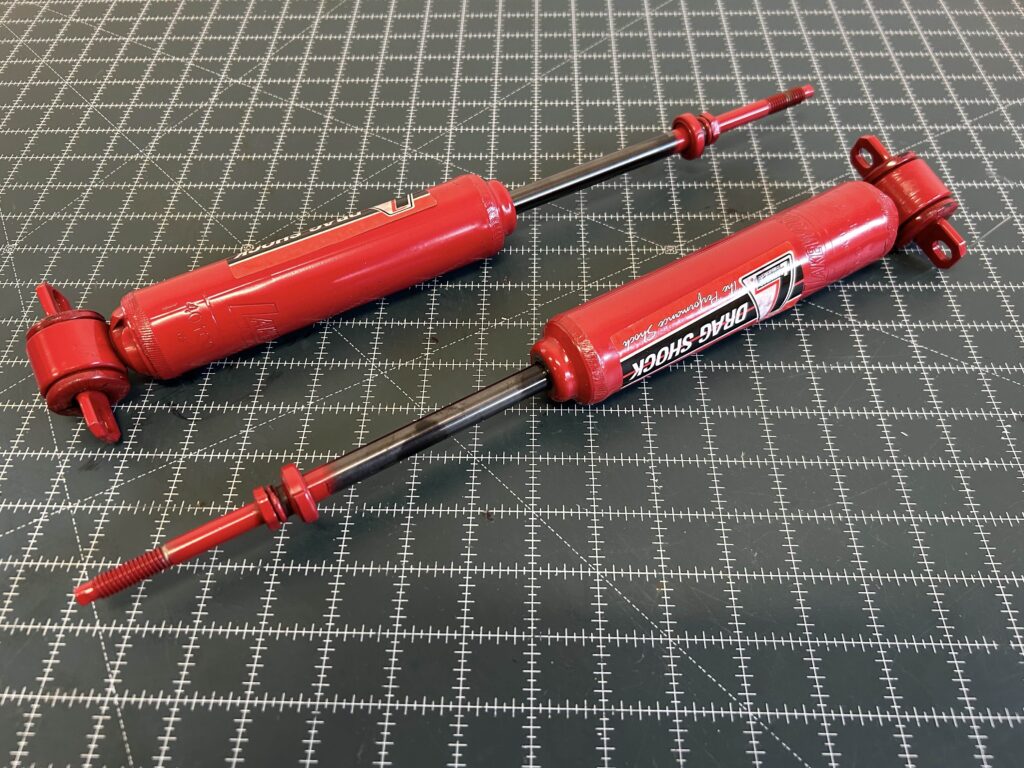
Great examples of inexpensive adjustable shocks are Summit Racing’s Drag Racing Shocks and Competition Engineering’s Adjustable Drag Shocks. Both are three-way adjustable with 60/40, 80/20, and 90/10 ratios. The valving splits are for compression (the first number) and rebound (second number). Using a 90/10 ratio as an example, only 10% of the force is required to extend the shock, but it takes 90% of the force to compress it.
Here are some general rules of thumb when choosing a front shock ratio:
A 90/10 setting is deal for slippery track conditions and for low-torque, heavy cars that need a great deal of suspension travel. It allows the front-end to lift quickly and shift weight to the rear tires, then settle slowly to extend weight transfer and traction.
An 80/20 setting offers a compromise between quick weight transfer and slightly more front-end control if your car gets unstable or loses steering control. It also helps improve mid-track stability for heavier cars.
A 60/40 setting restricts rapid front end rise the most. It provides good bump and rebound control than a 90/10 shock, so it’s good for cars that see a lot of street time. The ratio is also good for tightly prepped tracks where a quick front rise causes wheel hop or loss of steering control.
Setting a Shock
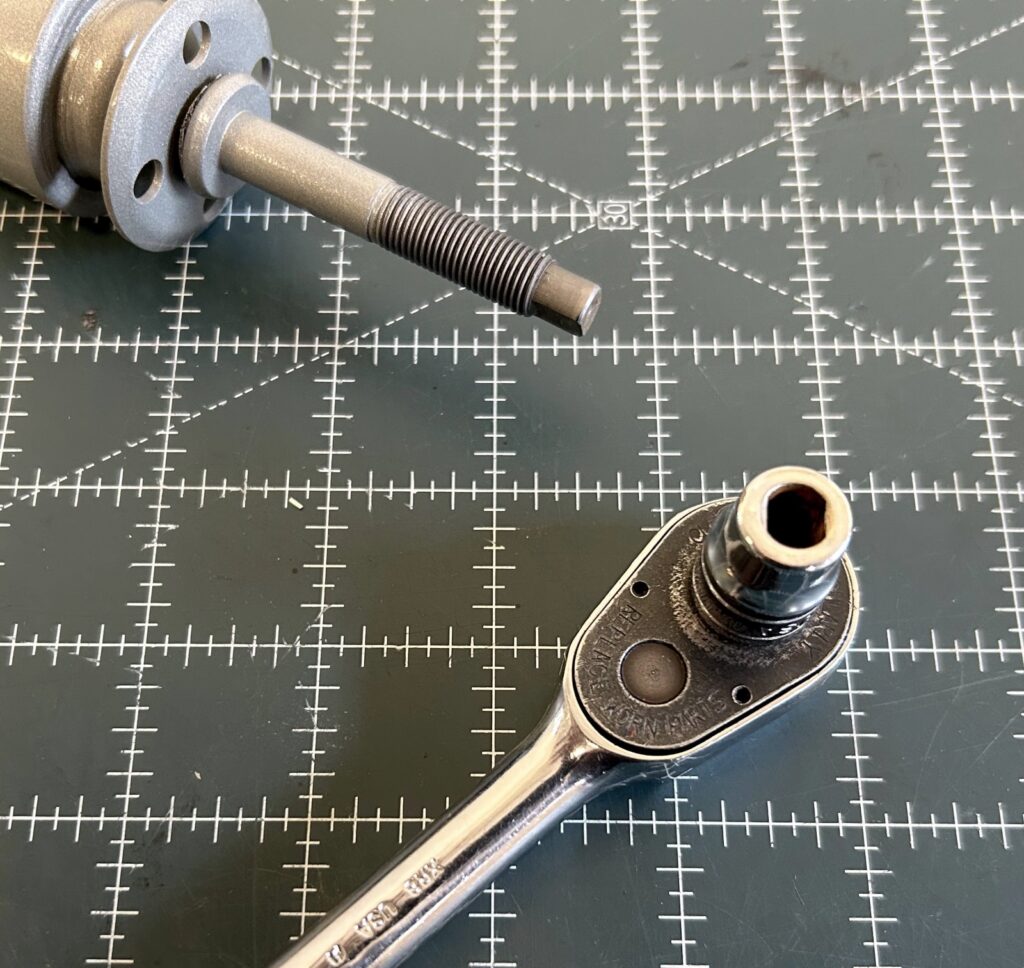
Unlike super-expensive adjustable front shocks that have external adjustment knobs, the Summit Racing and Competition Engineering have internal adjusters. Each has a specific adjustment procedure. Keep in mind both brands of shocks have to be adjusted out of the car.
Summit Racing Shocks
Keep the shock upright and cycle it a few times, then compress fully. This will engage an internal pawl that connects to the adjuster.
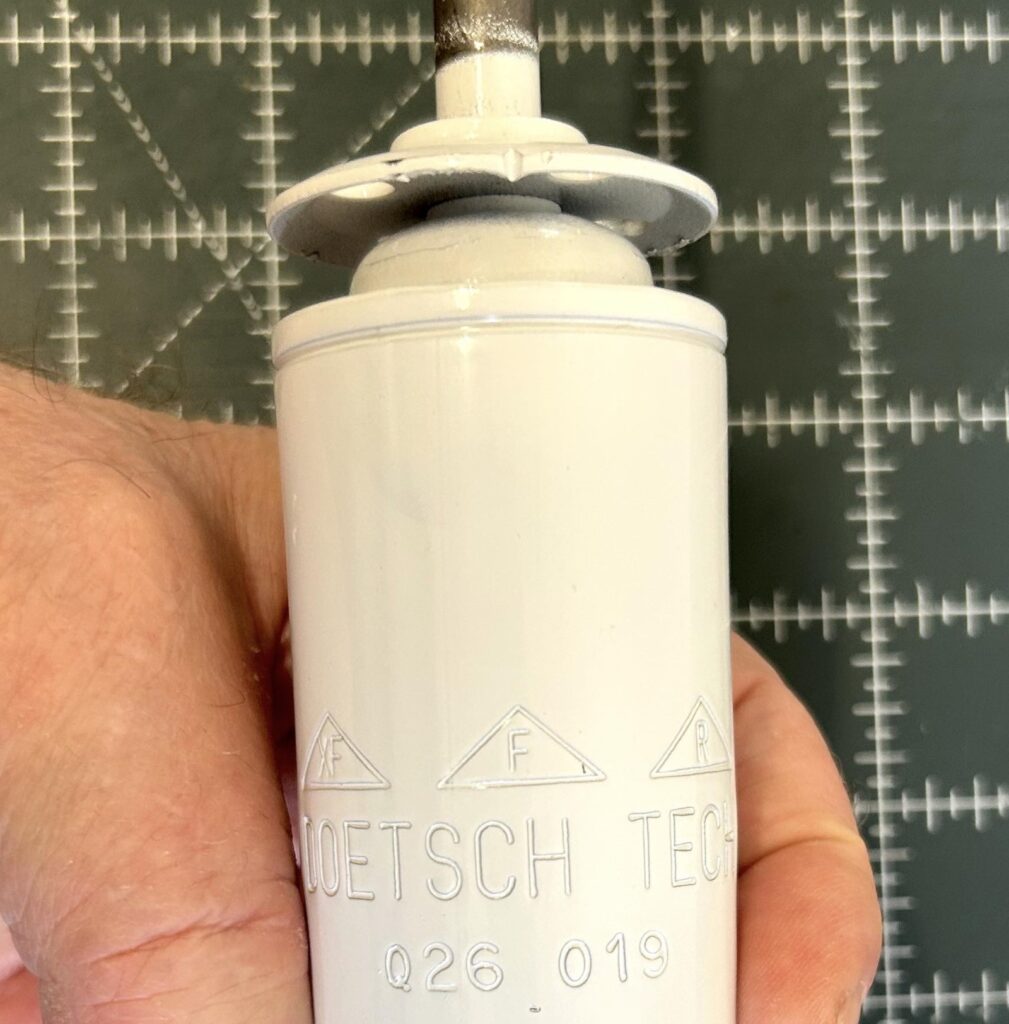
The shock absorber is shipped in the Firm (F, 80/20) position. To adjust to the Regular (R, 90/10) or Extra Firm (XF, 60/40) position, do the following:
- Align the index notch on the shock collar with the F triangle on the shock body by rotating either the shock body or piston rod
- Compress the piston rod completely and rotate slightly in either direction until the rod collapses a slight additional amount
- If you want to change to the R or XF setting, hold the shock firmly collapsed and rotate the index notch until a “click” is heard and the index mark is aligned with the desired setting
- Release the shock and stroke by hand to confirm adjustment
Competition Engineering Shocks
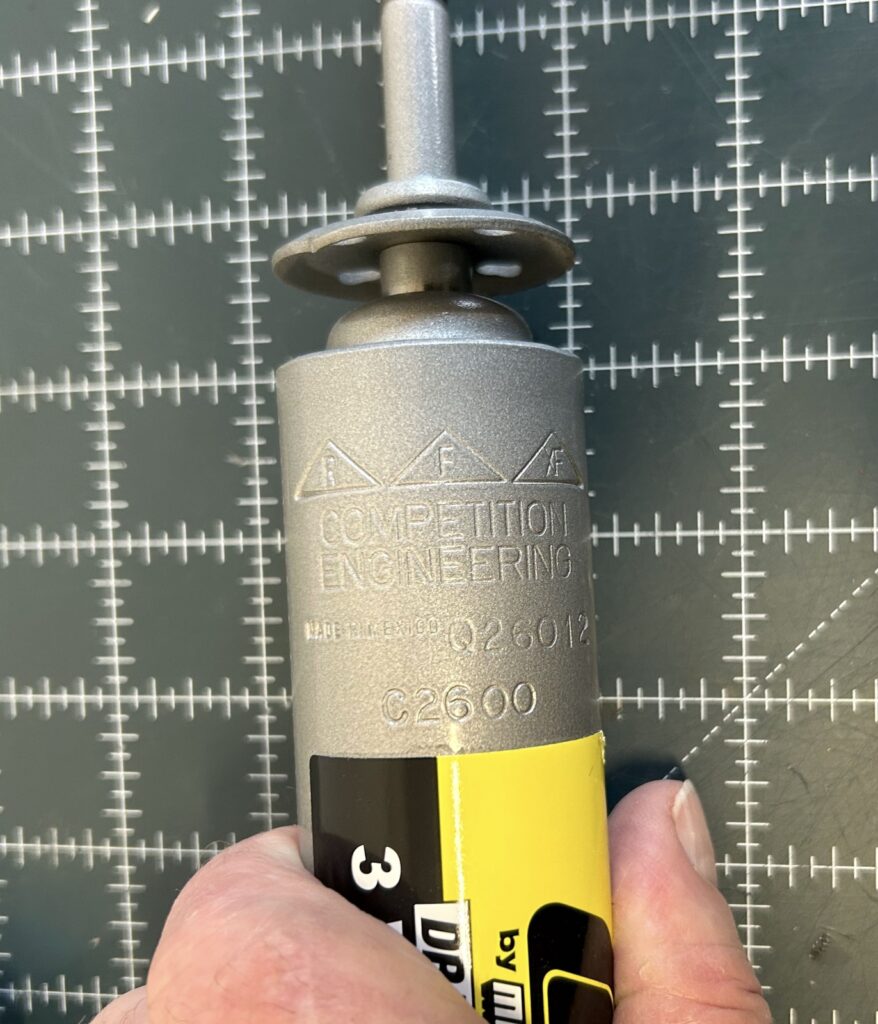
- Keep the shock upright and fully collapse it. Rotate the notch indicator on the shock collar clockwise for several revolutions after clicks are heard. This action fully engages the adjustment mechanism
- Rotate the notch indicator to desired setting. The loudest click will be the baseline setting (60/40), the next click is 80/20, and the last click is 90/10
Competition Engineering also suggests purging the shock of any air that may be trapped inside during shipment. Skipping this step can make the shock feel like it’s not functioning properly. To purge the shock, hold it upright and completely cycle it 12-15 times. This applies to the Summit Racing shocks as well.
Don’t want to deal with adjustments? You can get a set of 90/10 or 70/30 front shocks and swap them out when track or weather conditions change. In most cars, that usually amounts to dealing with three fasteners per side—not really a massive job. Just like with the adjustable shocks, the valving determines how fast the front end will rise and how slow it will settle down.
As you can see, you don’t have to be super rich to tune the front suspension of your car. It boils down to using the right mix of components and tuning for the track you’re running on.